

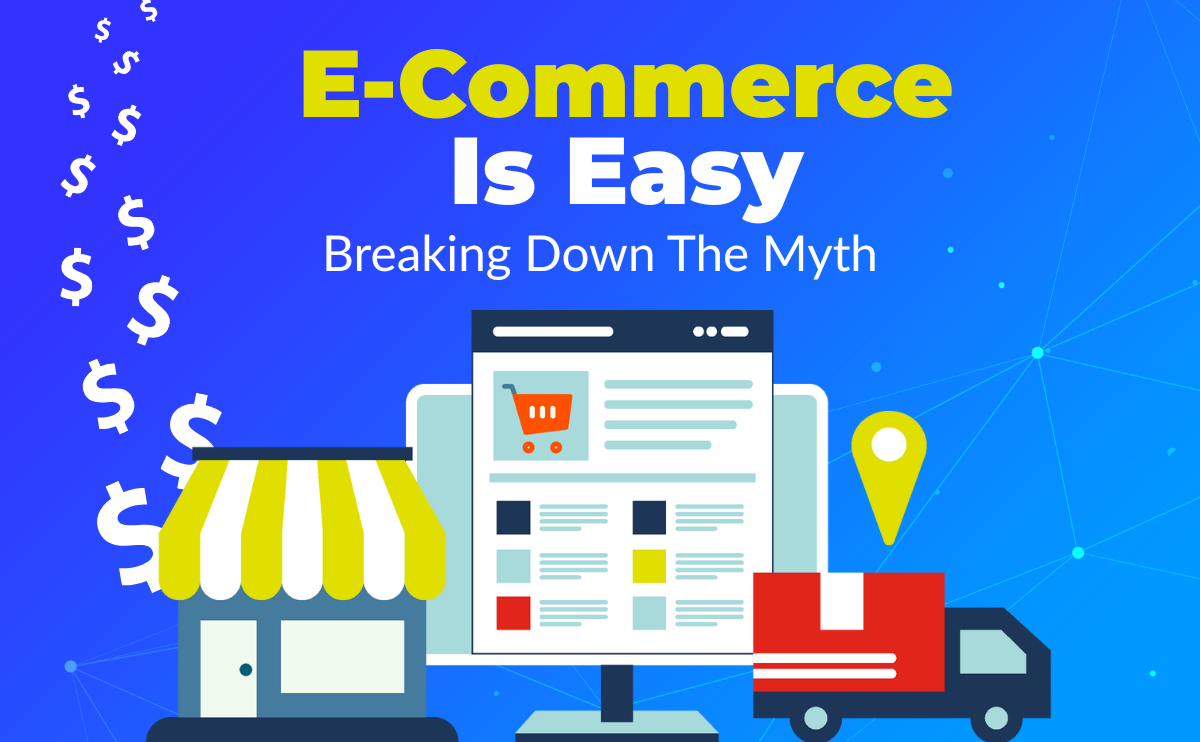
Many small businesses today are turning to e-commerce as a way to reach more customers and grow their sales. With so many online tools available, it’s easy to assume that launching an e-commerce website will be an effortless and automatic path to success. However, several persistent misconceptions can lead business owners to underestimate what it truly takes to build and sustain a profitable online presence. We’re unpacking some of the most common misconceptions about e-commerce and highlighting why creating a seamless omnichannel experience is essential for long-term growth.
Misconception #1: “Setting up an online store is easy.”
On the surface, building an e-commerce site can be straightforward. Platforms like Shopify, WooCommerce, and BigCommerce offer templates, plug-and-play apps, and user-friendly dashboards. But while getting a website live is simple, running a successful e-commerce operation is anything but.
Behind every functioning online store is a long list of responsibilities:
- Maintaining accurate inventory
- Creating high-quality product listings
- Processing orders quickly
- Managing shipping, tracking, and returns
- Monitoring analytics and optimizing performance
Each of these tasks demands time, attention, and consistency. Without proper planning, small businesses can quickly feel overwhelmed. Aftermarket Websites helps streamline all of these day-to-day tasks by syncing with your preferred Total Truck Centers warehouse distributor for inventory accuracy, automatically generating and updating product listings, providing a unified dashboard for order management, integrating with major shipping carriers, and offering built-in analytics for clearer performance insights.
While no platform can eliminate the work, choosing the right tools can make ecommerce operations far more manageable.
Misconception #2: “Once the site is live, sales will start rolling in.”
This is one of the most painful misconceptions for new e-commerce owners. After the excitement of launching a website, reality sets in, traffic doesn’t magically appear, and competition is fierce.
To attract customers, businesses must actively market their online store. That might include:
- Paid advertising (Google, Meta, TikTok, etc.)
- Search engine optimization (SEO)
- Email marketing
- Social media engagement
- Content creation
- Influencer or affiliate partnerships
Success in e-commerce is a long game. It takes consistent effort to build visibility, trust, and repeat customer behavior. The website is only the foundation, the strategy you build on top of it is what drives real growth. Our platform is focused on organic SEO by tying product data to your physical address, and we have pre-built social media content that can be used for boosted or promoted advertisements on social channels with ReadyPosts.
Misconception #3: “E-commerce is only about the website.”
A website may be the digital storefront, but it’s only one part of the broader customer journey. Today’s shoppers move fluidly between online and offline interactions. They may discover your brand on social media, ask a question through chat, pick up their order in-store, contact customer service later, or initiate a return through a different channel. This is where omnichannel becomes critical for brick-and-mortar truck-accessory retailers, where an omnichannel approach means creating a seamless experience between the physical store, online catalog, in-store pickup, installation services, customer communication, and post-purchase support.
An omnichannel strategy ensures that every touchpoint, website, email, social media, in-store interactions, customer service, packaging, and delivery, feels unified and consistent. A customer should feel like they’re interacting with one brand, not a series of disconnected departments.
When done well, omnichannel experiences lead to:
- Higher customer satisfaction
- Stronger brand loyalty (and trust)
- More repeat purchases
- Fewer customer service issues
- Better data insights across the entire journey
In other words, your e-commerce site is just the beginning. The follow-through matters just as much.
Misconception #4: “Doing everything in-house saves money.”
Understandably, small business owners want to keep costs low, and in some areas, DIY can work. But e-commerce involves multiple specialized skill sets, and trying to master everything alone can slow growth, or create costly mistakes.
Tasks that often require outside expertise include:
- Web design and development
- User experience optimization
- Digital marketing strategy
- Paid advertising management
- Cybersecurity
- Bookkeeping and e-commerce accounting
- Customer support at scale
Outsourcing or partnering with professionals isn’t just convenient, it’s often the smartest way to save time, reduce costs, and support long-term growth. Aftermarket Websites® helps lighten that load by handling the website design and build, providing clean and modern layouts, and connecting customers with trusted partners for digital marketing, paid advertising, and SEO support who are focused on the automotive aftermarket, like Hedges & Co. This support helps small businesses spend less time on tasks and more time running their business.
Moving Forward
Running an e-commerce website isn’t as simple as setting up a page and waiting for orders to roll in. It requires a thoughtful blend of strategy, technology, customer experience, and ongoing optimization. By understanding these common misconceptions, small businesses can make more informed decisions and avoid unnecessary setbacks, including spending money without seeing a return on investment due to a limited understanding of the e-commerce landscape.
Most importantly, success in e-commerce today hinges on delivering an intentional, seamless omnichannel experience. When every touchpoint is connected and consistent, customers feel valued, and businesses earn the kind of loyalty that drives long-term success. Schedule a demo to learn more about how Aftermarket Websites® can elevate your website.